Enjoy browsing our trips to Chile , or click the button below to go to our extended site search.



Chile Trips
21 Day Trip – Chilean Wildlife and Wild Landscapes

Chile
Our Chile trip unfolded across striking contrasts, beginning in the Atacama Desert, where salt flats, volcanoes, and vast skies shaped silent horizons. We observed flamingos feeding in high-altitude lagoons and learned from Indigenous communities whose traditions remain closely tied to place.
DETAILSChile Country Information
Chile is one of South America’s most geographically diverse countries, stretching over 4,300 km along the western edge of the continent. From the arid Atacama Desert in the north to the glaciers and fjords of Patagonia in the south, Chile offers an extraordinary range of landscapes, climates, and ecosystems.
Our expeditions in Chile focus on immersive adventure experiences and exploration of the country’s dramatic natural environments. Activities may include trekking, kayaking, wildlife observation, and cultural exploration. You’ll travel through deserts, volcanoes, alpine lakes, temperate rainforests, and remote coastal regions, while gaining insight into Chile’s indigenous cultures and modern way of life.
Many of our Chile trips are successfully combined with neighbouring destinations such as Argentina or Bolivia, offering a broader perspective on South America’s contrasting landscapes and cultures. Whether exploring Torres del Paine National Park, the Lake District, Easter Island (Rapa Nui), or the Atacama Desert, Chile delivers a powerful mix of adventure, scenery, and cultural depth.
Geography
Chile is located on the western coast of South America, bordered by the Pacific Ocean to the west, Argentina to the east, Peru to the north, and Bolivia to the northeast. Despite its narrow width—averaging just 177 km—the country spans a vast latitudinal range, resulting in extreme geographic and climatic diversity.
Chile is home to the Andes Mountains, extensive glaciers, fjords, active volcanoes, deserts, fertile valleys, and thousands of kilometres of coastline. The country also includes remote territories such as Easter Island in the Pacific Ocean. Several of Chile’s national parks and protected areas are recognised internationally for their ecological significance.
Government & Economy
Chile has one of the most stable and developed economies in South America. It is a leading global producer of copper, which remains its primary export. Other important sectors include agriculture, fisheries, forestry, manufacturing, and services. Tourism continues to grow steadily, particularly in regions known for adventure travel and natural landscapes.
Language
The official language of Chile is Spanish. English is spoken to varying degrees in major cities and tourist areas, but basic Spanish is useful when travelling in more remote regions.

PACKAGES

Chile

Contact Us
Chile
PACKAGES
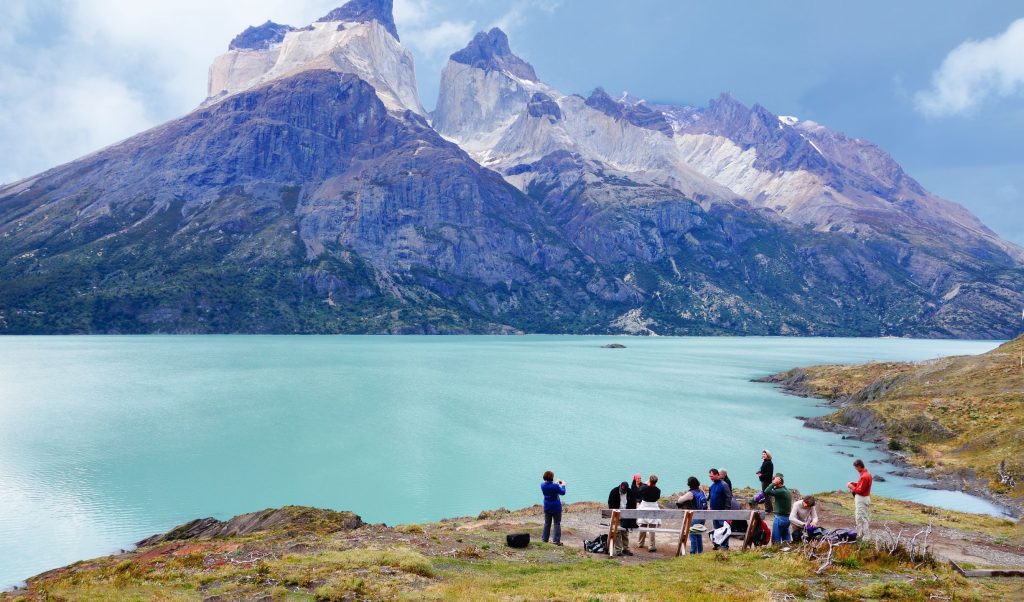
21 Day Trip – Chilean Wildlife and Wild Landscapes
Chile
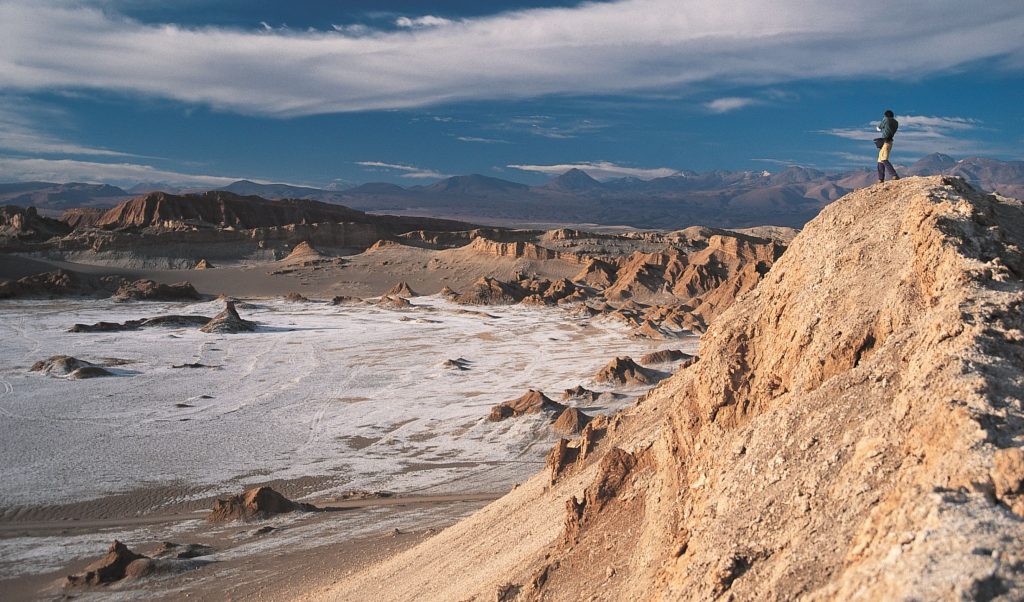
Our Chile trip unfolded across striking contrasts, beginning in the Atacama Desert, where salt flats, volcanoes, and vast skies shaped silent horizons. We observed flamingos feeding in high-altitude lagoons and learned from Indigenous communities whose traditions remain closely tied to place.
DETAILS

PIONEER EXPEDITIONS NEWSLETTER
Travel with Us

Pioneer Expeditions is a leading adventure company specialising in unique activity and wildlife holidays for tailor made, small group and luxury holidays to key destinations.




DO SOMETHING EXTRAORDINARY

ABOUT PIONEER

USEFUL INFO
© 2026 PIONEER EXPEDITIONS WEBSITE